Crew, T. (2020). Higher Education and Working-Class Academics. Precarity and Diversity in Academia. London: Palgrave Macmillan.
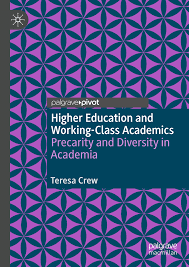
Crew, T. (2020). Higher Education and Working-Class Academics. Precarity and Diversity in Academia. London: Palgrave Macmillan.
To start of my section on inequalities I thought I would return to research on Gypsies and Travellers as they experience, and are being held back by, some of the worst outcomes of any group across a wide range of social indicators. This report highlights just how bad this is.
For further details on a local level the North West Wales Gypsy and Traveller Accommodation Needs Assessment (GTANA) that I coordinated with Dr David Hirst is an illuminating starting point http://www.academia.edu/4265530/North_West_Wales_Gypsy_and_Traveller_Accommodation_Needs_Assessment_GTANA_
I’m still catching up with the Manosphere but luckily for me, the very thorough kidstrangelove@gmail.com has compiled a list of 184 blogs that come under this moniker. I’m aiming to make my way through these blogs so that I know a little more about the subject. Here, with full credit and thanks to Kid Strange Love, is the list of the blogs
A few of the best UK feminist blogs that I have come across. Feel free to add more in the comments section and I will add them to the list
The F Word https://www.thefword.org.uk/
Black Girl Dancing at Lughnasa http://thediasporadiva.tumblr.com/
UK Feminista http://ukfeminista.org.uk/
The Everyday Sexism Project http://everydaysexism.com/
Another Angry Woman https://stavvers.wordpress.com/
Penny Red http://laurie-penny.com/
Reni Eddo-Lodge http://renieddolodge.co.uk/
Rarely Wears Lipstick http://www.rarelywearslipstick.com/
Finally, A Feminism 101 Blog https://finallyfeminism101.wordpress.com/
Bad Reputation https://badreputation.org.uk/
I will be looking through some US blogs and will post links in due course
Article published in People, Place and Policy (2015): 9/1, pp. 29-47
Beyond graduation: The trajectories of graduates in North Wales
Beyond Graduation: trajectories of graduates from higher education in North Wales
Thesis written by Dr Teresa Crew
Abstract
Higher education is in a state of transformation, with the economic recession leading to an even greater emphasis on graduate outcomes. Existing UK-wide research suggests that graduate opportunities are influenced by pre-entry characteristics, institution attended and subject studied, as well as the individual’s store of social capital. The research for this study uses data from a cohort of graduates in North Wales to explore the issues in further detail. The mixed methods design compares secondary data on access, student experience and destinations with original survey and interview data. A critique of the current emphasis on graduate outcomes six months after graduation leads to a focus on longer-term trajectories. The results from graduates from four different types of degree awarding institutions and three specific subjects – chosen for contrast and convenience – reveal both similarities and differences compared with existing studies. Whilst the findings support existing research on pre-entry factors, they also indicate that regional assets e.g. Welsh language skills, access to transport and local networks, influence the patterns of subsequent trajectories. The more biographical and extended longitudinal approach contributes to the literature on graduates by providing an analytical typology of their post-graduation trajectories. It also contributes to Bourdieu-inspired theoretical discussion of inequalities in higher education and beyond. The study has implications for policy and practice in universities, careers services and the Higher Educational Statistics Agency (HESA).
For full thesis see: Beyond Grad thesis
Book Review – Tehmina N Basit and Sally Tomlinson (eds)
Social Inclusion and Higher Education
Bristol: Policy Press, 2012, £70 hbk (ISBN: 9781847427977), 328 pp.
Reviewed by: Teresa Crew, Bangor University, UK
The global expansion of higher education, and the inclusion of non-traditional students,
has been widely covered in academic literature (see Thomas, 2002; Tight, 2004; Tight
et al., 2009). However, perhaps due in some part to the retention discourse that often
dominates, less attention has been devoted to the experiences of under-represented
groups whilst in university. This volume, edited by Tehmina N. Basit and Sally Tomlinson,
provides a timely, empirical and theoretical addition to the literature. The text suggests
that whilst such students may face some difficulties, they are both capable and resourceful
when negotiating higher education.
‘Capitals, ethnicity and higher education’ (Chapter 1) by Tariq Modood offers a
clearly elucidated explanation for this resourcefulness. He observes that whilst, as a
whole, ethnic minorities are more likely to enter university when compared to white
students, there are variations. Young Pakistani men have high levels of participation, as
do older females from a Caribbean background, but most groups (apart from South Asian
and Chinese students) tend to favour post-1992 institutions (pp. 19–20). He then develops
the concept of ‘ethnic capital’ – a body of literature that has greater currency in the
USA – as being useful for understanding the academic aspiration and success found
amongst the latter groups. Modood, influenced by Bourdieu and Putnam, suggests that
despite discrimination and ‘ethnic penalties’ (p. 21), working-class individuals from
South Asian and Chinese communities often have durable ambitions for upward mobility.
This aspiration is conveyed to their children, who then go on to internalise and develop
ambitions similar to their parents. A combination of familial relationships, transmission
of aspiration – similar to that described by Baker and Brown (2008) – and norms reinforcement may be influential for the upward educational mobility of some ethnic minority students (pp. 30–2).
A discussion of the development of widening participation in the UK (Chapter 2), the
USA (Chapter 7) and Australia (Chapter 4) suggests that the story of the inclusion of
newer cohorts of students is broadly similar despite occurring in different countries. The
UK chapter posits a reminder that policies to increase participation amongst previously
excluded groups were not constructed by New Labour, nor should they just be located in
a post-Fordism/skills agenda (p. 41). Instead David W. Thompson refers to the industrial
revolutions of the late 18th and 19th centuries as the real impetus for change and reform
in the education system (p. 43). For the most part, all three chapters display how little has
changed. Despite initial tensions, the UK middle classes drove through the expansion of
higher education; working-class participation was viewed with suspicion and universities
were required to be progressive (p. 44). The chapters on higher education in the USA and
Australia provide an excellent overview of the conflicting myths that often surround widening participation (i.e. that such policies will increase equity, yet may lower standards). This is, perhaps, a commentary that would be recognised in other countries.
Chapter 8 by Pamela Hernadez and Diane M. Dunlop outlines an interesting empirical
study on the successful higher education strategies used by female Latina students in the
USA. The study found that the main sources of support were not institutional but rather
from fellow female Latino students. These relationships, being pivotal to the women’s
intellectual, personal and social development, provided a ‘safe space’ to discuss conflicting
familial and academic expectations (p. 232). This chapter is also of note for future
research purposes, as Hernadez and Dunlop discuss how initially they did not receive a
strong response to their survey. The reason for this was not the chosen research method,
nor how the study was promoted, but, rather, as a result of the modesty of Latino students
regarding their academic achievements. Many such students felt that their participation
would not make a big difference to the study or that their experiences were ‘not that
unique’ (p. 221). Further research would be informative as this may be an issue amongst
other non-traditional groups.
This clearly elucidated and well-rounded book is suitable for those who are leading,
managing, teaching or researching in institutions of higher education. The text, overall,
is to be commended as students are portrayed in a positive manner: moving away from a
discourse framing them as ‘deficient’ or ‘problematic’. However, there is still an emphasis
on ‘difference’, and a lack of acknowledgement that in some institutions ‘non-traditional’
is the ‘norm’. The introduction, whilst wonderfully crafted, would have been enhanced
by critiquing the term ‘non-traditional’ student. Basit and Tomlinson’s combination of
the theoretical with the empirical should be used as a template for future discussions of
higher education, and its diverse students. It is hoped that this text will prompt a similar,
much-needed discussion of the experiences of this cohort, post graduation.
References
Baker S and Brown B (2008) Habitus and homeland: Educational aspirations, family life and culture in autobiographical narratives of educational experience in rural Wales. Sociologia Ruralis 48(1): 57–72.
Thomas L (2002) Student retention in higher education: The role of institutional habitus. Journal of Education Policy 17(4): 423–32.
Tight M (2004) The Routledge Falmer Reader in Higher Education. London: Routledge Falmer.
Tight M, Mok KH, Huisman J and Morphew C (2009) The Routledge International Handbook of Higher Education. London: Routledge.
Thank you for including my Twitter account @Beyond_Grad and Blog https://genderandinequalitiesblog.wordpress.com/ on the 101 Accounts that PhD’s should follow. Visit this page for useful resources http://onlinephdprogram.org/twitter-accounts/
Beyond Graduation: trajectories of graduates from higher education in north Wales
Higher education is in a state of transformation, with the economic recession leading to an even greater emphasis on graduate outcomes. Existing UK-wide research suggests that graduate opportunities are influenced by pre-entry characteristics; institution attended and subject studied, as well as the individual’s store of social capital. The research for this study uses data from a cohort of graduates in north Wales to explore the issues in further detail. The mixed methods design compares secondary data on access, student experience and destinations with original survey and interview data. A critique of the current emphasis on graduate outcomes six months after graduation leads to a focus on longer-term trajectories. The results from graduates from four different types of degree awarding institutions and three specific subjects – chosen for contrast and convenience – reveal both similarities and differences compared with existing studies. Whilst the findings support existing research on pre-entry factors, they also indicate that regional assets e.g. Welsh language skills, access to transport and local networks, influence the patterns of subsequent trajectories. The more biographical and extended approach longitudinal approach contributes to the literature on graduates by providing an analytical typology of their post-graduation trajectories. It also contributes to Bourdieu-inspired theoretical discussion of inequalities in higher education and beyond. The study has implications for policy and practice in universities, careers services and the Higher Educational Statistics Agency (HESA).

